
Introduction
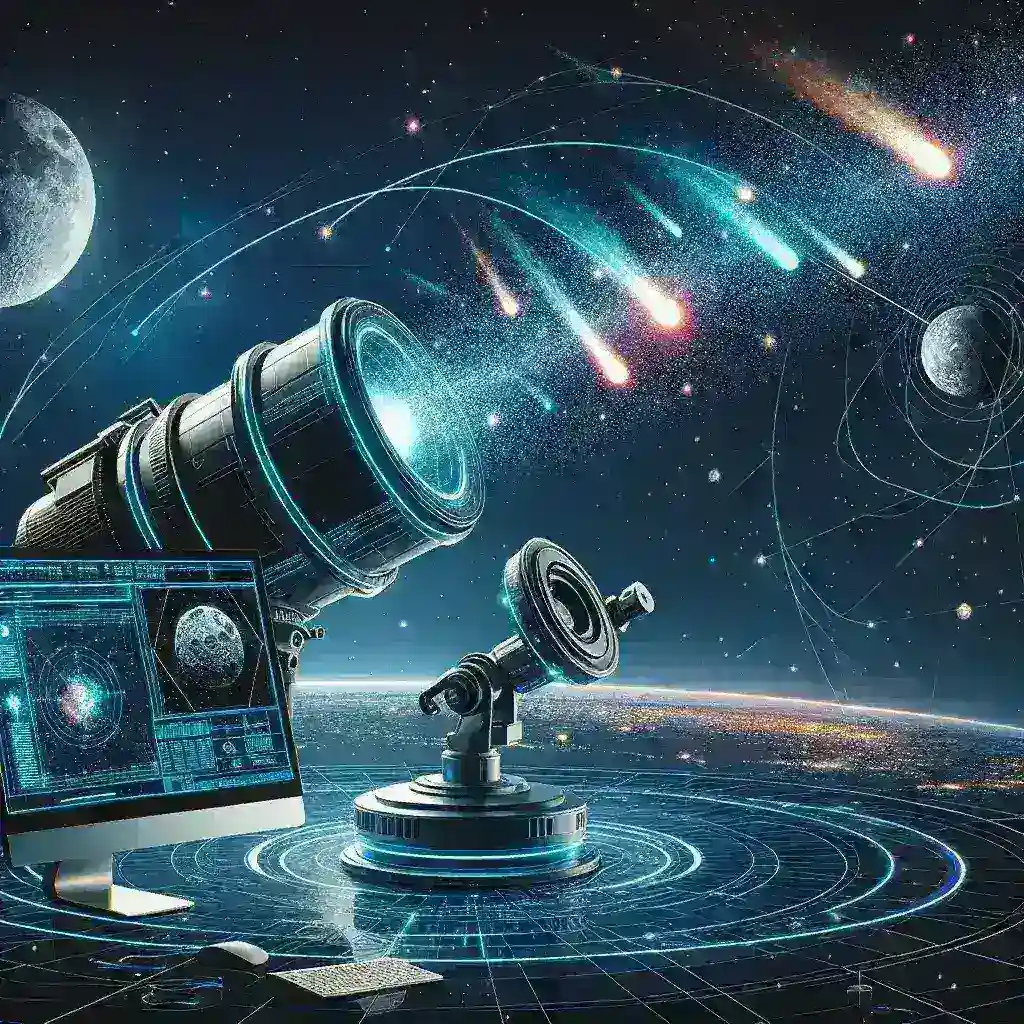
The universe is a vast and mysterious expanse that has captivated human imagination for centuries. Among its many wonders are comets, which are icy bodies that originate from the far reaches of the solar system. Recently, with the advent of AI astronomy systems, scientists have made significant strides in detecting interstellar comets that enter our solar system. This article delves into the technology behind these systems, their historical significance, and the implications for future astronomical research.
Understanding Interstellar Comets
Interstellar comets are celestial objects that travel through space, originating from outside the solar system. Unlike typical comets that form within our solar system, interstellar comets provide unique insights into the materials and conditions present in other star systems. The first confirmed interstellar comet, ‘Oumuamua, was identified in 2017, sparking interest and excitement in the astronomical community.
Characteristics of Interstellar Comets
- High Speed: Interstellar comets often travel at much higher velocities than their solar system counterparts.
- Unpredictable Trajectories: Their paths can be highly eccentric, making them challenging to track.
- Diverse Composition: They may contain organic compounds and materials that differ from those found in our solar system, offering clues about the formation of planetary systems.
The Role of AI in Astronomy
Artificial Intelligence is transforming various sectors, and astronomy is no exception. AI systems can process vast amounts of data quickly, identify patterns, and enhance our understanding of celestial phenomena. In the context of detecting interstellar comets, AI plays a crucial role in analyzing data from telescopes and other observational instruments.
Machine Learning Algorithms
Machine learning algorithms enable AI systems to learn from data, improving their predictive capabilities over time. These algorithms can be trained on historical data of known comets and their trajectories, enabling them to recognize potential interstellar objects among the noise of astronomical observations.
Data Processing Capabilities
AI astronomy systems can sift through terabytes of data generated by telescopes, identifying anomalies that may indicate the presence of an interstellar comet. This capability significantly reduces the time required for human analysts to identify and investigate potential candidates.
Historical Context
The journey to our current understanding of comets and their origins has been long and complex. For centuries, comets were viewed with a mixture of wonder and fear, often thought to be omens or harbingers of change. It wasn’t until the late 20th century that scientists began to develop theories about their origins and behavior.
Key Milestones in Cometary Studies
- Halley’s Comet: First recorded in 240 BC, this periodic comet has been observed for over two millennia.
- Deep Impact Mission: Launched in 2005, this NASA mission provided invaluable data on the composition of comets.
- Rosetta Mission: Launched in 2004, it successfully orbited and landed on comet 67P/Churyumov-Gerasimenko, revealing new insights into cometary structure and behavior.
Future Predictions and Implications
As AI technology continues to advance, the detection of interstellar comets will likely become more refined, leading to a deeper understanding of our universe. Experts predict that these advancements will not only enhance our ability to detect such objects but also improve our understanding of their origins and compositions.
Potential Discoveries
With improved detection methods, scientists may uncover a plethora of interstellar comets, each offering unique information about the conditions prevailing in their home systems. This could lead to breakthroughs in our understanding of planetary formation and the potential for life beyond Earth.
Impacts on Space Exploration
As more interstellar comets are detected, there may be opportunities for future missions to study these objects up close. Space agencies may consider the feasibility of sending probes to collect data, similar to missions conducted in our solar system.
Challenges and Considerations
While the advancements in AI astronomy are promising, several challenges remain. The detection of interstellar comets, for instance, is complicated by their unpredictable trajectories and varying brightness levels. Additionally, the quality of data from telescopes can vary, impacting the effectiveness of AI systems.
Ethical Considerations
The use of AI in astronomy also raises ethical questions regarding data privacy and the potential misuse of technology. As AI continues to evolve, it is essential for scientists and policymakers to consider its implications for society.
Conclusion
The integration of AI astronomy systems in detecting interstellar comets represents a significant leap forward in our understanding of the universe. As technology continues to evolve, the potential for groundbreaking discoveries increases, expanding our knowledge of celestial phenomena. By embracing these advancements, we can look forward to a future where the mysteries of interstellar comets are unraveled, revealing the secrets of our universe.
Call to Action
As we stand on the brink of this new era in astronomy, it is crucial for enthusiasts and experts alike to stay informed about the latest developments in AI technology and its applications in space exploration. Engage with the astronomy community, participate in discussions, and support research initiatives aimed at uncovering the mysteries of interstellar comets.