
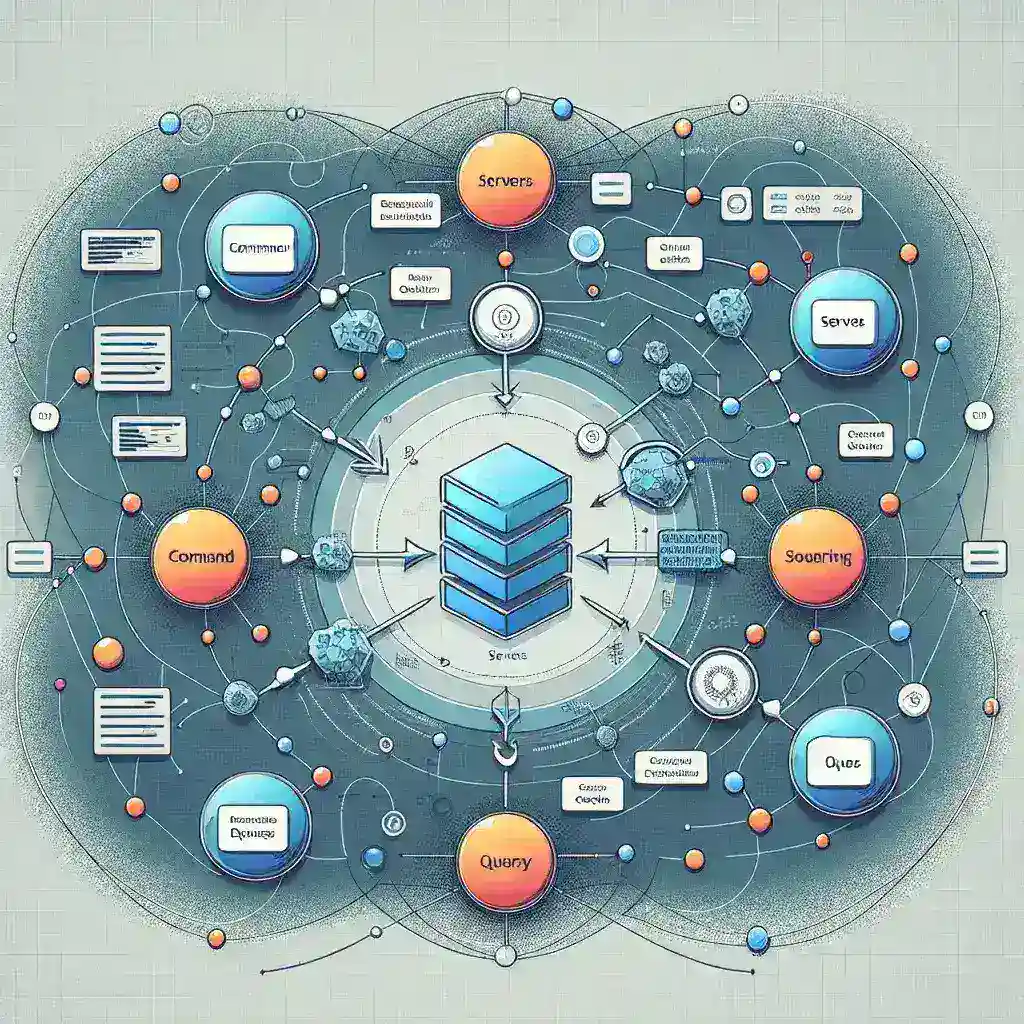
In the ever-evolving landscape of software architecture, Event Sourcing and Command Query Responsibility Segregation (CQRS) have emerged as powerful patterns that enable developers to build scalable, maintainable, and auditable systems. These architectural approaches have gained significant traction among enterprises seeking to handle complex business domains while maintaining data integrity and system performance.
Understanding Event Sourcing and CQRS Fundamentals
Before diving into the best platforms, it’s crucial to understand what makes these architectural patterns so compelling. Event Sourcing stores the state of a system as a sequence of events rather than just the current state, providing a complete audit trail and enabling temporal queries. CQRS separates read and write operations, allowing for optimized data models for different use cases.
The combination of these patterns offers several advantages:
- Complete audit trail and historical data preservation
- Improved scalability through separated read and write models
- Enhanced system resilience and fault tolerance
- Better performance optimization for specific use cases
- Simplified debugging and system analysis
EventStore: The Purpose-Built Solution
EventStore stands out as a database specifically designed for Event Sourcing applications. Created by Greg Young, one of the pioneers of Event Sourcing, this platform offers native support for event streams and provides excellent performance characteristics for event-driven architectures.
Key Features of EventStore
- Native event stream storage with optimistic concurrency control
- Built-in projections for creating read models
- Persistent subscriptions for reliable event processing
- Clustering support for high availability
- HTTP API and multiple client libraries
EventStore excels in scenarios where you need a dedicated event store with strong consistency guarantees and native Event Sourcing capabilities. However, organizations should consider the learning curve and operational overhead when evaluating this solution.
Apache Kafka: The Distributed Streaming Giant
While not exclusively designed for Event Sourcing, Apache Kafka has become a popular choice for implementing event-driven architectures at scale. Its distributed nature and high-throughput capabilities make it suitable for large enterprises with complex event processing requirements.
Advantages of Using Kafka
- Exceptional scalability and fault tolerance
- Rich ecosystem of tools and connectors
- Strong community support and extensive documentation
- Integration with popular streaming frameworks
- Cost-effective for high-volume scenarios
Kafka shines in environments where you need to process millions of events per second and require integration with various data processing systems. The platform’s log-based storage naturally aligns with Event Sourcing principles, though additional tooling may be needed for complete CQRS implementation.
AWS EventBridge and Amazon Kinesis
Amazon Web Services offers several solutions for event-driven architectures. AWS EventBridge provides a serverless event bus service, while Amazon Kinesis offers real-time data streaming capabilities.
AWS EventBridge Benefits
- Serverless architecture with automatic scaling
- Built-in integration with AWS services
- Schema registry for event validation
- Cost-effective for moderate event volumes
- Minimal operational overhead
Amazon Kinesis Advantages
- Real-time data processing capabilities
- Multiple data streams with shard-based scaling
- Integration with AWS analytics services
- Support for both streaming and batch processing
These AWS solutions work exceptionally well for organizations already invested in the AWS ecosystem and those seeking managed services with minimal operational complexity.
Azure Event Hubs and Service Bus
Microsoft Azure provides robust event processing capabilities through Azure Event Hubs and Azure Service Bus. These services offer enterprise-grade features with seamless integration into the Azure cloud platform.
Azure Event Hubs excels at ingesting massive amounts of event data, while Service Bus provides reliable messaging with advanced features like dead letter queues and duplicate detection. Together, they form a comprehensive foundation for Event Sourcing and CQRS implementations.
Axon Framework: Java-Centric Approach
For Java developers, the Axon Framework provides a comprehensive solution for implementing CQRS and Event Sourcing patterns. Built specifically for the Java ecosystem, Axon offers high-level abstractions that simplify the development of event-driven applications.
Axon Framework Highlights
- Built-in support for CQRS and Event Sourcing patterns
- Comprehensive testing support
- Integration with popular Java frameworks
- Axon Server for event store and message routing
- Strong type safety and compile-time validation
The framework significantly reduces boilerplate code and provides excellent developer experience for Java-based projects, though it may not be suitable for polyglot environments.
MongoDB and Traditional Databases
While specialized event stores offer optimal performance, traditional databases like MongoDB, PostgreSQL, and SQL Server can also support Event Sourcing implementations with proper design patterns.
MongoDB’s document-based storage naturally accommodates event data, while PostgreSQL’s JSONB support and advanced indexing capabilities make it a viable option for smaller-scale implementations. These solutions offer the advantage of leveraging existing database expertise and infrastructure.
Choosing the Right Platform: Key Considerations
Selecting the optimal platform depends on several critical factors:
Scale and Performance Requirements
Consider your expected event volume, read/write patterns, and latency requirements. High-throughput scenarios may benefit from Kafka or cloud-native solutions, while smaller applications might thrive with EventStore or traditional databases.
Team Expertise and Learning Curve
Evaluate your team’s existing knowledge and the time available for learning new technologies. Frameworks like Axon can accelerate development for Java teams, while cloud services reduce operational complexity.
Integration Requirements
Assess how the chosen platform will integrate with your existing technology stack, third-party services, and future architectural plans. Cloud-native solutions often provide better integration capabilities within their respective ecosystems.
Operational Complexity
Consider the operational overhead of maintaining the chosen platform. Managed cloud services typically require less operational expertise than self-hosted solutions like Kafka or EventStore.
Implementation Best Practices
Regardless of the platform chosen, successful Event Sourcing and CQRS implementations require adherence to several best practices:
- Event Design: Create immutable, well-structured events with clear semantics
- Versioning Strategy: Plan for event schema evolution from the beginning
- Snapshot Management: Implement snapshotting for performance optimization
- Error Handling: Design robust error handling and compensation mechanisms
- Monitoring: Implement comprehensive monitoring and alerting
Future Trends and Considerations
The Event Sourcing and CQRS landscape continues to evolve with emerging trends like serverless computing, edge processing, and enhanced developer tooling. Organizations should consider these trends when making platform decisions to ensure long-term viability.
Machine learning integration, real-time analytics, and improved developer experience tools are becoming increasingly important factors in platform selection. The rise of event mesh architectures and distributed event processing also influences how organizations approach these patterns.
Conclusion
The choice of platform for Event Sourcing and CQRS architectures significantly impacts the success of your implementation. While specialized solutions like EventStore and Axon Framework offer purpose-built features, cloud-native options like AWS EventBridge and Azure Event Hubs provide scalability and reduced operational overhead.
Consider your specific requirements, team expertise, and long-term architectural goals when making this critical decision. Remember that the best platform is one that aligns with your organization’s needs, technical constraints, and growth trajectory. By carefully evaluating these factors and following established best practices, you can build robust, scalable systems that leverage the full potential of Event Sourcing and CQRS patterns.